
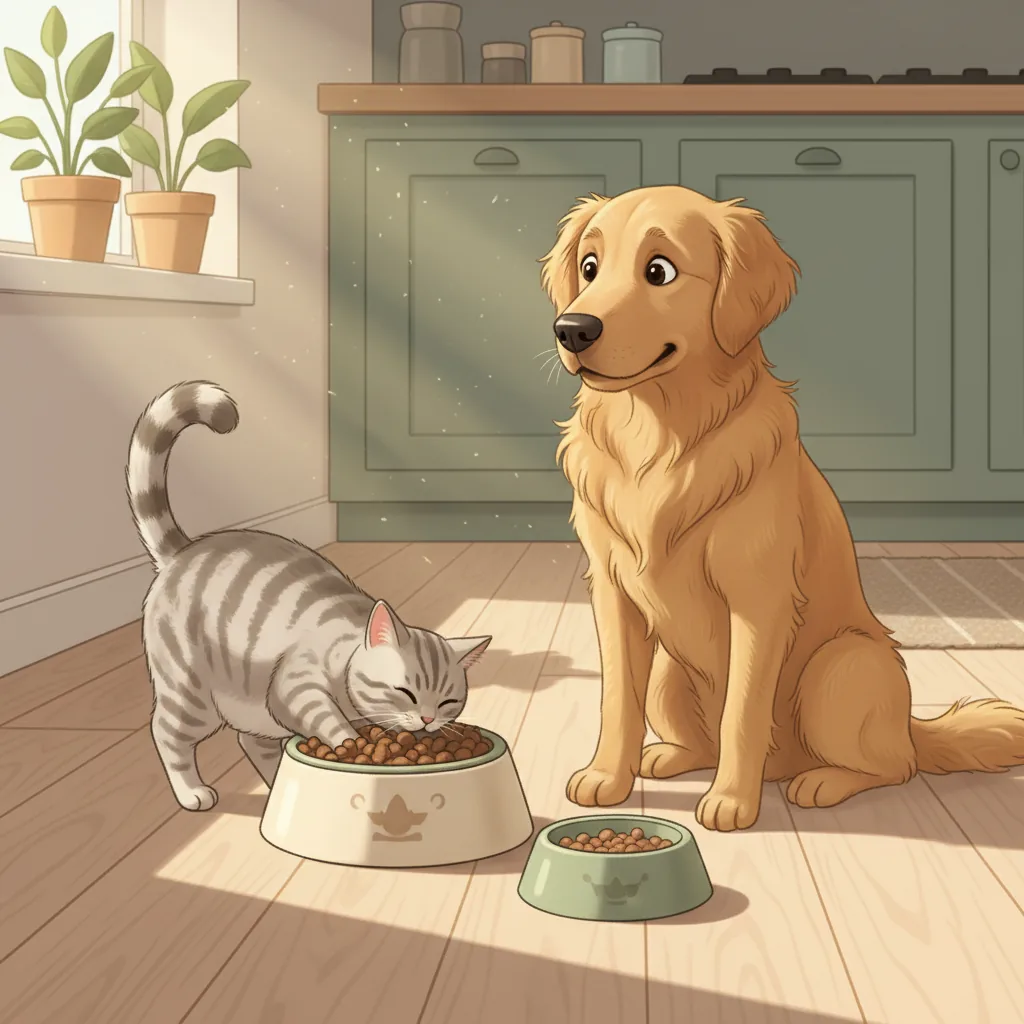
Short answer: a cat that eats some dog food, or a dog that eats some cat food, is usually fine. Neither food is toxic to the other species. The problem is regular feeding. Dog food is not formulated to meet a cat's needs and can leave a cat short of nutrients it cannot make itself, such as taurine and vitamin A. Cat food is richer in protein and fat than most dogs need, so a dog that keeps raiding the cat's bowl risks stomach upset, weight gain and, in some dogs, pancreatitis.
If it happened once, there is usually nothing to do except watch your pet and keep the next meal normal. If it is happening every day, or your pet is a kitten, a puppy, a senior or on a special diet, read on. This guide explains why the two foods differ, what each swap can do, how to stop it in a multi-pet home and when to call your vet.
Why cat food and dog food are different
Dogs are omnivores that can make several nutrients from other building blocks. Cats are obligate carnivores: their bodies lack some of the conversion steps a dog's body uses, so they must get certain nutrients ready-made from animal-based food. Pet food makers formulate each species' food around those needs. The European pet food industry federation lists the main gaps in its fact sheet on feeding dog food to cats:
- Taurine. Cats must get taurine from food. It supports the heart, the retina and digestion. A long-term shortage can cause heart muscle disease (dilated cardiomyopathy) and vision loss. Dogs normally make enough of their own, so many dog foods add little or none.
- Vitamin A. Dogs can turn beta-carotene from plants into vitamin A. Cats cannot, so cat food contains preformed vitamin A.
- Arachidonic acid. Cats lack the enzyme that turns linoleic acid into this essential fatty acid. Dogs can make it, so dog food rarely adds it.
- Niacin. Dogs can make niacin (vitamin B3) from the amino acid tryptophan. Cats need it preformed.
- Protein. Cats need considerably more protein than dogs, and they keep using protein for energy even when they eat too little of it.
None of this makes dog food poisonous to cats. It means dog food is incomplete for a cat when it becomes the main diet.
Cat food vs dog food at a glance
In the United States, a food labelled "complete and balanced" has to meet the AAFCO nutrient profile for its species and life stage. The minimums below are on a dry matter basis, meaning with the water removed. The guaranteed analysis on a bag or can is "as fed", including water, so the label numbers will look different.
| Adult dog | Puppy | Adult cat | Kitten | |
|---|---|---|---|---|
| Crude protein | 18% | 22.5% | 26% | 30% |
| Crude fat | 5.5% | 8.5% | 9% | 9% |
| Taurine | Not required | Not required | Required | Required |
| Arachidonic acid | Not required | Not required | Required | Required |
| Vitamin A source | Can use beta-carotene | Can use beta-carotene | Must be preformed | Must be preformed |
To compare a label with these minimums, divide the nutrient percentage by the food's dry matter (100 minus the moisture percentage) and multiply by 100. A canned food with 10% protein and 78% moisture works out to 10 ÷ 22 × 100 ≈ 45% protein on a dry matter basis. The U.S. FDA walks through the same calculation in its guide to "complete and balanced" pet food.
Can cats eat dog food?
A few bites, or even a meal in an emergency when nothing else is available, will not harm a healthy adult cat. Get proper cat food as soon as you can.
What happens if a cat eats dog food every day?
The risk builds over weeks and months rather than overnight. A cat living mainly on dog food can run short of taurine, vitamin A, arachidonic acid and protein. The early signs are vague: a duller coat, weight or muscle loss, low energy. The serious consequences of taurine deficiency, heart disease and retinal damage, may not show until real harm is done. If your cat has been eating mostly dog food for a while, tell your vet, even if your cat seems well.
Can kittens eat dog food?
Kittens should not. Growing kittens need the highest protein levels of all and complete nutrition for their developing hearts, eyes and brains. A kitten that has been eating dog food regularly should switch to a kitten or all-life-stages cat food, and it is worth mentioning at the next vet visit.
Can dogs eat cat food?
A dog that cleans out the cat's bowl once will most likely be fine, apart from possibly a soft stool or an unsettled stomach. Cat food is not toxic to dogs. The concern is that it is richer: more protein, more fat and more calories per bite than most dog foods.
What happens if a dog eats cat food regularly?
Regular cat food can cause:
- Stomach and bowel upset: vomiting, diarrhea or gas, especially after a large amount.
- Weight gain: cat food is energy-dense, and stolen meals come on top of the dog's own food.
- Pancreatitis risk: a sudden high-fat meal is one recognized trigger for pancreatitis in dogs, according to the American Animal Hospital Association. Dogs with a history of pancreatitis, overweight dogs and breeds prone to high blood fats, such as miniature schnauzers, are more at risk.
- An unbalanced diet: cat food is not formulated for dogs and can crowd out the dog's complete food.
Can puppies eat cat food?
Puppies need a diet formulated for growth, with the right calcium and phosphorus balance for their size, especially large-breed puppies. Cat food does not provide that. An occasional nibble is not a crisis, but it should not replace puppy food.
Can my dog eat my cat's wet food?
Wet and dry cat food carry the same nutritional concern. Wet food is often more tempting because of its smell, so dogs tend to go after it more persistently. If your dog has a sensitive stomach, even small amounts of rich wet cat food can trigger an upset.
When to call your vet
Contact your veterinarian promptly if, after eating the other pet's food, your pet shows:
- Repeated vomiting, or vomiting with a painful, hunched or bloated belly
- Diarrhea that lasts more than a day, or contains blood
- Lethargy, weakness or refusing food
- Any symptoms in a pet with a history of pancreatitis, a prescription diet, diabetes, kidney disease or food allergies
Also call if your cat has been living mostly on dog food for weeks, even without symptoms. A vet can check for problems that are not visible at home. If you cannot reach your vet and your pet seems unwell, contact an emergency clinic.
How to stop your cat and dog eating each other's food
In most multi-pet homes the fix is about where and when food is available, not what it is:
- Feed in separate spaces. Put the cat's bowl somewhere the dog cannot reach, such as a counter, shelf or cat tree platform, or feed in a room with a cat flap or a door gap the dog cannot fit through.
- Use set mealtimes. Free-fed bowls invite theft. Serve meals, give each pet time to eat, then pick up what is left.
- Supervise mealtimes until both pets have settled into the new routine.
- Try a microchip feeder. It opens only for the pet whose microchip it recognizes, which suits cats that like to graze.
- Keep treats species-appropriate and count them in each pet's daily calories.
Check what is really in the bowl with Tasma
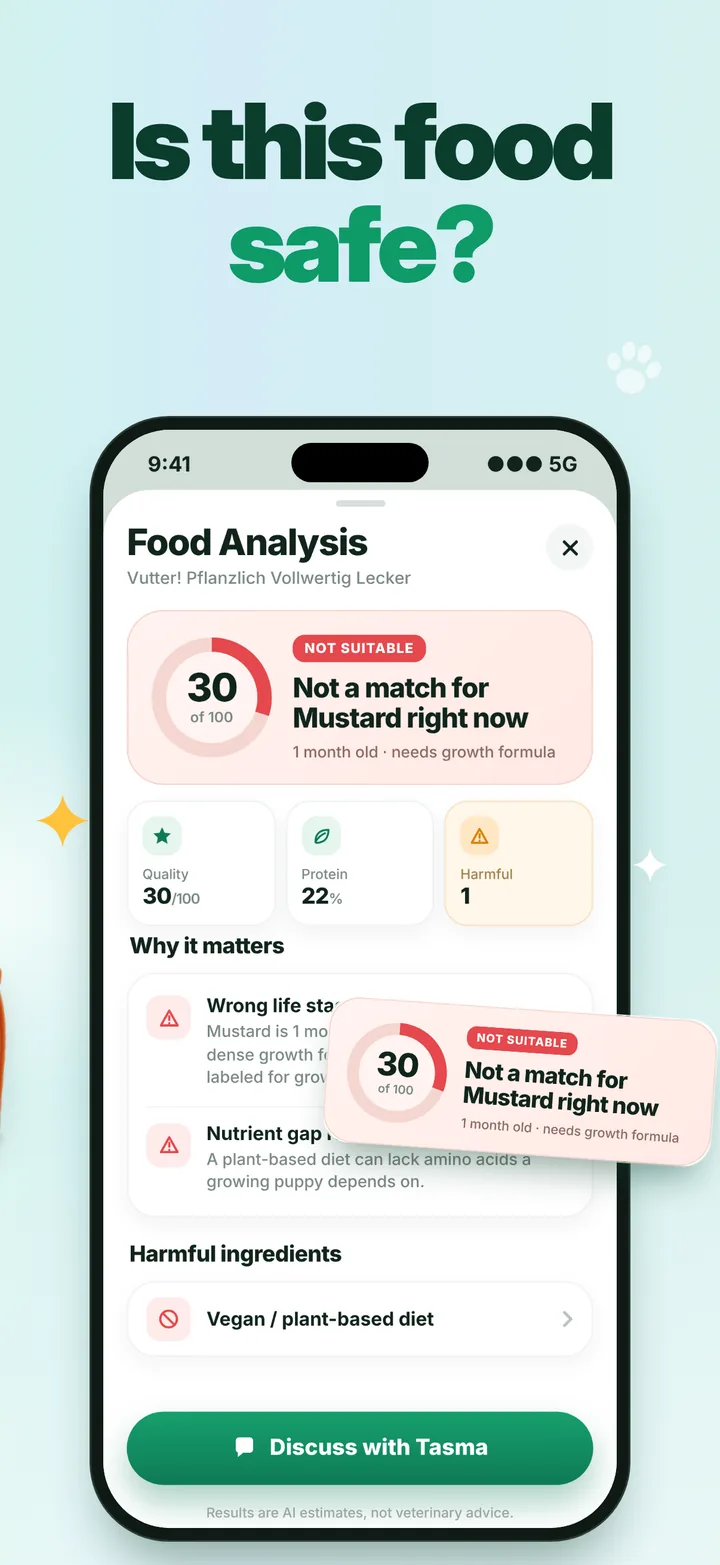
The easiest way to know whether a food fits your pet is to read the label against your pet's species, age and needs, and that is exactly what Tasma's Food Analysis does. Photograph the ingredient list or the front of the bag, and Tasma checks it against your pet's profile. It flags a food formulated for the wrong species or life stage, ingredients that may be harmful, and nutrient gaps worth asking your vet about.
In the example below, Tasma flagged a plant-based dog food as not suitable for Mustard, a one-month-old puppy who needs a growth formula. The same check catches the opposite situation in a multi-pet home: a cat food in a dog's profile, or the dog's food in the cat's.
Tasma's results are AI estimates to help you ask better questions. They are not a veterinary diagnosis. For more on how the feature reads labels, see our guide to Food Analysis, or browse all Tasma features.
Frequently asked questions
My cat ate dog food. Should I be worried?
Not if it was a one-off. Watch for vomiting or diarrhea over the next day and go back to cat food at the next meal. Call your vet if symptoms appear or if your cat has been eating dog food regularly.
My dog ate a whole bowl of cat food. What should I do?
Keep an eye on your dog for the next 24 hours and make sure fresh water is available. Do not try to make your dog vomit. Call your vet if vomiting, diarrhea, belly pain or lethargy develop, or straight away if your dog has had pancreatitis before.
Can I feed my cat dog food for a day if I run out?
For a single day, a healthy adult cat will be fine. Plain cooked chicken or fish without seasoning, bones or onion and garlic is another short-term stopgap. Replace it with complete cat food as soon as possible.
Is there a food both my cat and my dog can eat?
Not as a complete diet. Foods labelled "complete and balanced" are formulated for one species. If your pets need a shared routine, feed each its own complete food at the same time in separate spots.
Why does my cat prefer the dog's food, or my dog the cat's?
Usually because it is new, within reach or simply the other pet's. Dogs are drawn to the stronger smell and higher fat of cat food. Changing where and when you feed is more effective than changing the food.