Can Dogs Eat Apples? What Happens If They Do? Let’s Find Out with Tasma
Can dogs eat apples, and what happens if they do? Explore apple flesh, seeds, cores and common questions, plus everyday pet-care guidance from Ask Tasma.
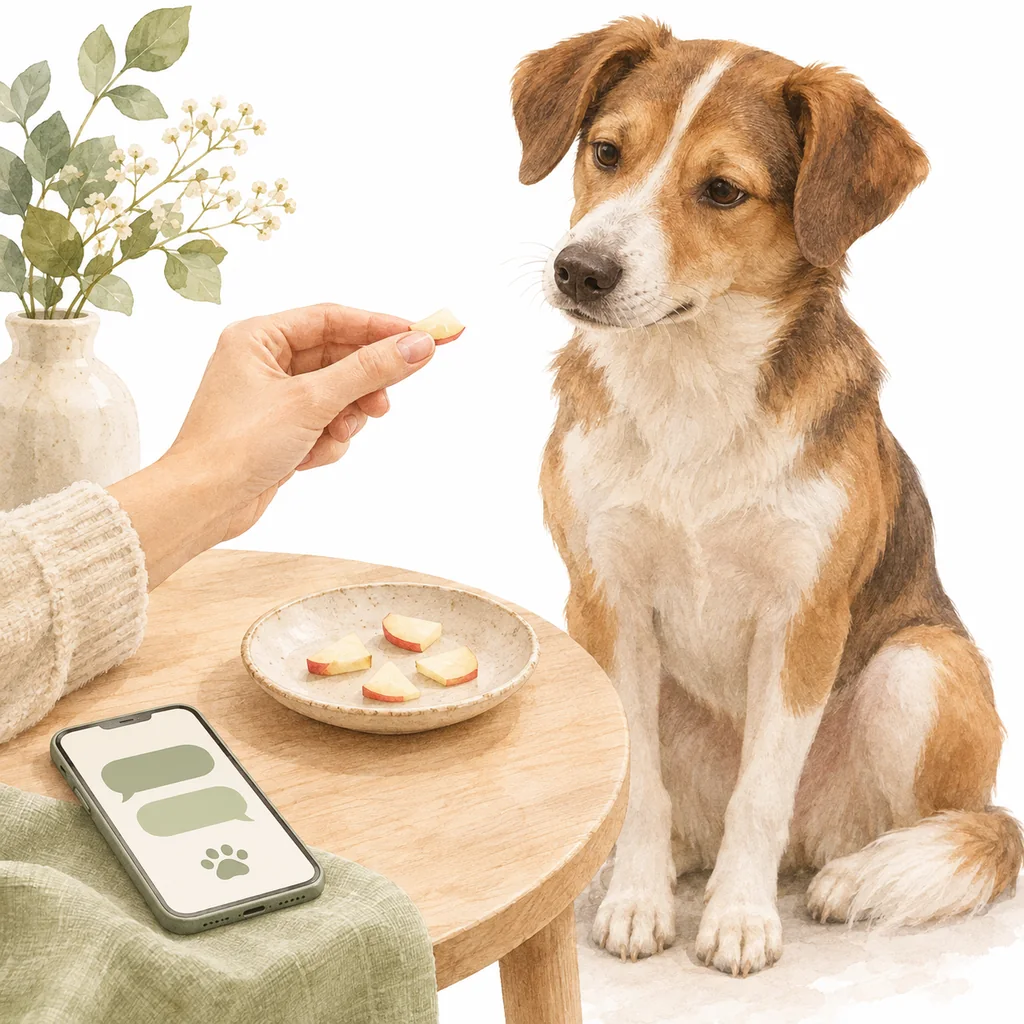
Can dogs eat apples? Many dogs can have a little plain apple flesh as an occasional treat, with the seeds and core removed and the fruit cut into suitable bite-sized pieces. That answer does not extend to a whole apple, an unknown dessert or every dog with a medical condition.
If your dog has already eaten some, first establish what was swallowed, roughly how much and when. This guide separates routine feeding questions from situations needing professional help, with Ask Tasma for everyday learning.
Can dogs eat apples safely? Preparation comes first
The veterinary charity PDSA includes de-seeded, cored apples among its dog-friendly fruit suggestions. Its dog diet guidance recommends plain fruit in very small quantities as an occasional treat, cut into bite-sized pieces. Wash the fruit, remove the stem, seeds and core, and supervise your dog while eating.
Treat apple as an optional extra alongside a complete diet. Skip it if your dog dislikes it. If your companion has a prescribed diet or a health condition, ask your veterinary team whether fruit fits their feeding plan before introducing it.
What happens if a dog eats an apple? Check the details
A little prepared flesh and a swallowed core are different situations. Do not assume every apple exposure is poisoning, or that every exposure is harmless. The ASPCA's apple safety advice explains that seeds can release cyanide when chewed or ground, while a couple of accidentally swallowed seeds are unlikely to cause a problem.
For a swallowed core, an uncertain amount of seeds, suspected toxicity or concerning symptoms, contact a veterinarian for advice. Breathing difficulty, choking or collapse calls for immediate veterinary attention. Keep the time, amount and relevant packaging available. Do not use an app conversation to delay urgent care.
Ask Tasma about everyday food questions
A question like 'Can my dog have a small apple treat?' can lead to useful follow-ups about preparation, routines or what to ask your vet. Ask Tasma is Tasma's AI-powered care assistant for informational conversations. It is not a live online veterinarian and cannot examine your dog, diagnose poisoning or provide emergency treatment.
For a non-urgent question, describe your pet and the food clearly rather than asking for a simple yes or no. You can return to Ask Tasma when a routine question comes to mind, while keeping your veterinary clinic as the source for medical decisions.
For a routine food question, include whether it is fresh fruit or another product, your dog's approximate size, and any dietary restrictions you already know about.
Explore the feature: Meet Ask Tasma, the AI care assistant.
Bring everyday care questions to Ask Tasma in the Tasma app, available through the App Store and Google Play.
Can dogs eat apples? Ten practical questions answered
Can dogs eat apples with the skin on?
Many dogs can eat small pieces of washed apple with the skin, but individual tolerance varies. Either way, remove the seeds, stem and core; leaving the skin on does not remove the need for careful preparation.
Can dogs eat green apples as well as red apples?
The preparation rules matter more than the color. Choose fresh, plain fruit and offer only a small amount of suitable flesh.
My dog ate apple seeds. Should I panic?
Do not assume a couple of swallowed seeds will cause poisoning; the ASPCA distinguishes this from the risk associated with chewed or ground seeds. Remove access to more fruit and ask a veterinarian if the amount is uncertain, seeds were chewed or your dog seems unwell.
What if my dog eats an apple core?
A core is not the same as prepared apple flesh and can present a choking or swallowing concern. Contact your veterinarian, especially if you do not know how much was swallowed. If your dog is choking or struggling to breathe, seek emergency veterinary care immediately.
How much apple can a dog eat?
There is no single portion that suits every dog. Keep it a very small occasional treat, considering your dog's size, usual diet and health needs. Ask your veterinary team for an appropriate amount rather than treating a whole apple as a standard serving.
Can puppies eat apples?
Ask your veterinary team before introducing new treats to a puppy's diet. If they approve apple, preparation and pieces suitable for the puppy matter. A snack should not displace the complete food intended for growth, and eating should always be supervised.
Can dogs eat applesauce, apple pie or apple snacks?
Do not extend advice about plain apple flesh to a prepared product. Sweeteners, flavorings and other ingredients change the question. Avoid sharing desserts or unfamiliar apple snacks; if your dog has already eaten one, keep the ingredient label for your veterinary team.
Can eating apples give a dog an upset stomach?
New foods or too much fruit may upset digestion. Stop offering apple if your dog reacts poorly and discuss persistent or concerning symptoms with a veterinarian. The timing alone does not prove apple caused the problem, so describe what else your dog ate or did.
My dog already ate an apple but seems fine. What should I check?
Check whether it was plain flesh, a core, seeds or a mixed food, and note the approximate amount and time. Contact a veterinarian for core ingestion, uncertain seed exposure or other concerns. Appearing comfortable now is not a guarantee that an exposure needs no assessment.
Can Ask Tasma help with questions about what dogs can eat?
Ask Tasma can help explain everyday pet-care information and organize follow-up questions. Give clear details and verify medical advice with your vet. It is an AI assistant, not a 24-hour veterinary consultation service. Use the app for routine learning, and contact a veterinarian directly for urgent concerns.
More to explore: Keep your pet's health details organized.
Find Ask Tasma in the Tasma app on the App Store and Google Play.
Tasma provides informational AI assistance and does not replace professional veterinary care. AI can be wrong. For health concerns, consult a veterinarian; urgent symptoms need immediate veterinary care.