
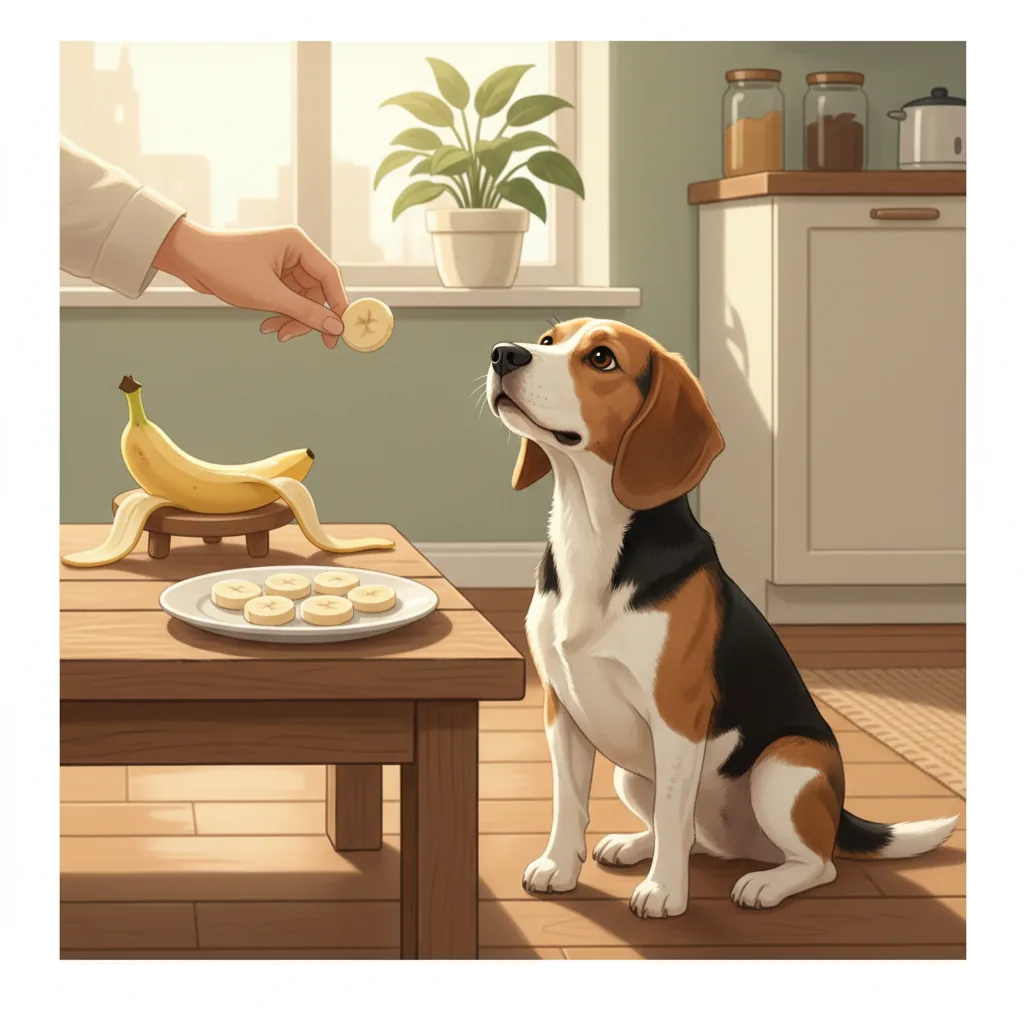
Short answer: yes, most healthy dogs can eat banana. Plain, peeled banana is not toxic to dogs, and many vets see it as a reasonable alternative to treats that are high in fat or salt. The catch is sugar: bananas are naturally sweet and fairly high in calories for their size, so they belong in the treat category, a few thin slices rather than a whole fruit. Leave out the peel, and skip banana bread, banana chips and other processed banana products.
If your dog has just eaten some banana, there is usually nothing to worry about. If it was a whole banana with the peel, or a slice of banana bread, or your dog has diabetes, is overweight or is on a special diet, read on. This guide covers how much banana is sensible by dog size, the peel, banana treats to avoid, puppies, and when to call your vet.
Are bananas good for dogs?
Bananas contain fibre, potassium, magnesium, vitamin B6, vitamin C and biotin, according to the vet-reviewed guide from PetMD. The American Kennel Club notes that some vets recommend banana as a healthier alternative to fatty or salty treats.
That does not make banana a health food for dogs. A dog eating a complete and balanced dog food already gets the vitamins and minerals it needs from that food. Banana's real advantages are simpler: it is soft, easy to portion, low in fat and most dogs like it. Its main drawback is natural sugar. Too much adds calories and can upset the stomach.
How much banana can a dog eat?
Treat banana like any other treat. Veterinary nutrition guidance from WSAVA and VCA Animal Hospitals says treats should make up no more than 10% of a dog's daily calories. The other 90% should come from complete and balanced dog food, otherwise the diet can become unbalanced and the dog can gain weight.
PetMD gives a practical daily guide in slices about ¼ inch (roughly half a centimetre) thick. These are maximums for a healthy adult dog, not targets, and they assume banana is the only treat that day:
| Dog size | Body weight | Banana per day |
|---|---|---|
| Extra-small | 2–10 lb (about 1–4.5 kg) | 1–2 slices |
| Small | 11–20 lb (about 5–9 kg) | 2–3 slices |
| Medium | 21–50 lb (about 10–23 kg) | 3–6 slices |
| Large | 51–90 lb (about 23–41 kg) | A handful of slices |
| Extra-large | 91 lb and over (about 41 kg and over) | Up to half a banana |
A whole banana is too much for most dogs, especially small breeds and puppies. If your dog also gets chews, training treats or table scraps, cut the banana back so the total stays inside the treat budget. For scale, WSAVA estimates the daily treat allowance of an average 10 kg adult dog at about 47 kcal, and that of a 20 kg dog at about 79 kcal.
Introduce banana gradually: start with one slice and watch for a soft stool or an upset stomach over the next day before offering it again.
Can dogs eat banana peel?
No. Banana peel is not considered toxic, but it is tough and hard for dogs to digest. Both PetMD and the AKC warn that peel can cause stomach upset and, in some cases, an intestinal blockage. Peel may also carry pesticide residue. Always peel the banana before sharing it, and put peels in a bin your dog cannot open.
A dog that grabs a single piece of peel will often just have a mild upset stomach. A small dog that eats a whole peel, or any dog that eats several, is more at risk of a blockage. See the signs in the section on when to call your vet below.
Banana treats: which are fine and which to skip
Fresh, plain banana is the safest form. Many banana products contain extra sugar or ingredients that are dangerous for dogs.
| Form | Okay for dogs? | Why |
|---|---|---|
| Fresh banana, peeled and sliced | Yes, in small amounts | The simplest option. Count it as a treat. |
| Mashed banana on food or in a stuffable toy | Yes, in small amounts | A good way to spread a small portion over a longer time. |
| Frozen banana pieces | Yes, small pieces | Cut into pieces sized for your dog. Do not give a whole frozen banana: it can be a choking or blockage risk. |
| Banana chips and dried banana | Best avoided | Dried fruit can swell with water in the gut, and shop-bought chips often contain added sugar, salt or preservatives. |
| Banana bread, muffins, pudding | No | Can contain xylitol, raisins, nutmeg, chocolate or a lot of sugar and fat. |
| Banana with peanut butter | Only if xylitol-free | Check the label every time. Xylitol is toxic to dogs, and peanut butter is high in calories. |
| Banana peel | No | Hard to digest and can cause a blockage. |
Xylitol is the ingredient to look for. It is a sweetener found in some sugar-free baked goods, yogurts and nut butters, and WSAVA lists it among the foods that are toxic to dogs, alongside chocolate, grapes and raisins. If your dog eats a baked good or spread that might contain xylitol, call your vet or an animal poison control line straight away rather than waiting for symptoms.
How to give your dog banana
A few simple ways to serve it:
- Sliced: peel, cut into thin slices and hand them out as rewards.
- Mashed on food: a spoonful of mashed banana on top of a meal. Count it as part of the treat budget.
- Frozen in a stuffable toy: mash a little banana into a rubber toy and freeze it for a longer-lasting treat on a warm day.
- Frozen bites: freeze small pieces sized for your dog. Supervise, especially with dogs that gulp.
- With plain yogurt: if you mix banana with yogurt, use plain yogurt without sugar or xylitol, and keep the portion small.
Skip anything with added sugar, syrup, chocolate, raisins or sweeteners, and never give a whole banana as a chew.
Dogs that should skip banana or ask first
Banana is not a good fit for every dog. Ask your vet before offering it if your dog:
- Is overweight or on a weight-loss plan. Banana's sugar and calories can work against the plan. Low-calorie treats your vet recommends are usually a better choice.
- Has diabetes. PetMD advises that dogs with diabetes should generally avoid banana unless their vet has approved it, because of its natural sugar.
- Is on a prescription or special diet, or has another medical condition. WSAVA notes that conventional treats may not be appropriate for dogs with medical conditions or dietary sensitivities, and extra foods can interfere with a therapeutic diet.
- Has a sensitive stomach. Start with a single small piece, or skip it.
True banana allergies are considered uncommon in dogs, but they can happen. Stop giving banana and talk to your vet if you notice itching, skin changes, vomiting or diarrhea after it.
Can puppies eat bananas?
Yes, in moderation. PetMD advises introducing banana slowly and in smaller portions than for adult dogs. Puppies need nearly all their calories from a complete puppy food formulated for growth, so a slice or two as an occasional training reward is plenty. Cut pieces small enough to swallow safely.
Is banana a good home remedy for dog diarrhea?
No. PetMD advises against using banana to treat diarrhea at home. The extra sugar and fibre can make things worse in some dogs, and diarrhea can have causes that need a vet. If your dog has diarrhea, see the signs below for when to call.
When to call your vet
Eating some plain banana is rarely an emergency. Contact your vet promptly if your dog:
- Ate a whole banana peel, several peels or a whole banana in one go, especially if it is a small dog
- Vomits repeatedly, will not eat, seems weak or lethargic, or has a painful or swollen belly
- Has diarrhea that is severe or lasts more than a day, or blood in the vomit or stool
- Strains to pass stool or passes nothing, which together with vomiting and loss of appetite can be a sign of an intestinal blockage
- Ate banana bread, muffins, a sugar-free product or a spread that might contain xylitol, chocolate or raisins: call straight away, even if your dog seems fine
- Has diabetes, pancreatitis, kidney disease or another condition and ate a large amount of banana or a banana product
Do not try to make your dog vomit unless a vet tells you to. If you cannot reach your vet and your dog seems unwell, or collapses, go to an emergency clinic.
How Tasma helps with everyday food questions
Banana questions rarely come alone. Can my dog have the banana-flavoured treats from the pet shop? Does this peanut butter contain xylitol? Is my dog getting too many snacks? Tasma has a few tools for exactly these moments.
Food & Nutrition Analysis. Photograph the ingredient list of a treat, chew or food, and Tasma explains the ingredients and nutritional information in everyday language and checks them against your dog's profile. Read more in our guide to Food Analysis.
Ask Tasma, the AI care assistant. Ask everyday questions such as how to fit fruit treats into your dog's routine, with your pet's profile as context. It is an AI assistant, not a veterinarian, and it cannot examine your dog or handle an emergency. Meet Ask Tasma.
Weight Tracking. If treats are creeping up, record your dog's weight and follow the trend over time, then share it with your vet. See Weight Tracking.
Tasma's results are AI-assisted information to help you ask better questions. They are not a veterinary diagnosis. Wondering about other fruit? Read Can dogs eat apples? or browse all Tasma features.
Frequently asked questions
My dog ate a whole banana. What should I do?
A healthy medium or large dog will usually be fine, perhaps with a soft stool or mild stomach upset. Make sure fresh water is available and skip treats for the rest of the day. Call your vet if vomiting, diarrhea, belly pain or loss of appetite develop, if the peel was eaten too, or if your dog is small or has diabetes.
Can dogs eat bananas every day?
A healthy dog can have a small amount of banana regularly, as long as it stays within the 10% treat budget together with all other treats. PetMD recommends treating banana as an occasional snack rather than a daily staple, and rotating it with lower-sugar treats is an easy way to do that.
Are green or overripe bananas safe for dogs?
Plain banana at any ripeness is not toxic, but ripeness changes texture and sweetness. Whatever the ripeness, keep the portion small, remove the peel and throw away any banana that is mouldy or fermented.
Can dogs eat banana-flavoured food or yogurt?
Check the label. Flavoured products often contain added sugar, and some sugar-free ones contain xylitol, which is toxic to dogs. Plain fresh banana is the safer choice.